Within Credibility Split
Did Uri Geller damage Puthoff's credibility?
The Geller tests remain a shorthand for the sceptical worry that Puthoff sometimes trusted extraordinary claims too quickly.
On this page
- What the SRI Geller work claimed
- Why sceptics see a fraud control problem
- How supporters separate old parapsychology from UAP work
Page outline Jump by section
Introduction
The Uri Geller episode remains one of the most persistent criticisms of Hal Puthoff’s credibility. Long before he became associated with modern UAP research, Puthoff was known for his work at Stanford Research Institute (SRI) on alleged psychic phenomena. His experiments with Israeli performer Uri Geller in the early 1970s were presented as evidence that unusual abilities deserved serious scientific investigation. Supporters argue that the work was exploratory, controversial and often misrepresented by later critics. Sceptics argue that it revealed a deeper problem: a tendency to accept extraordinary claims before fraud, error and alternative explanations had been ruled out.
 That dispute matters because many readers use the Geller case as a proxy for judging Puthoff’s later judgement on UFO and UAP questions. The central question is not whether spoon bending is real. It is whether the way Puthoff approached the Geller case shows a recurring pattern of credulity, or whether critics unfairly use a decades-old parapsychology controversy to dismiss everything he later did.
What the SRI Geller work claimed
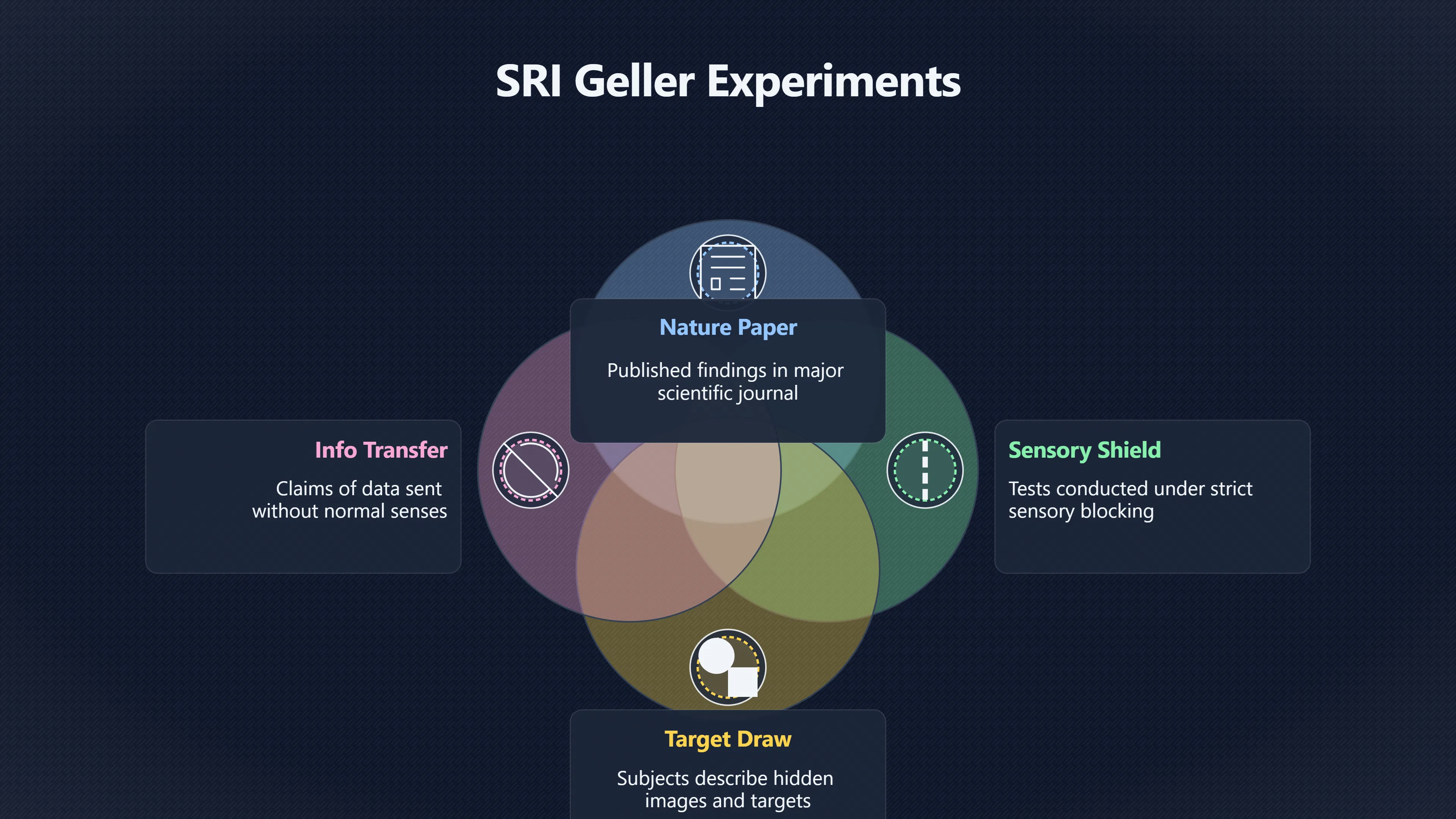
In 1972 and 1973, Puthoff and fellow researcher Russell Targ conducted experiments with Uri Geller at SRI. The work focused less on public spoon-bending demonstrations than on claims of information transfer under controlled conditions. Geller was asked to reproduce drawings, describe hidden targets and perform tasks that researchers argued could not be explained by ordinary sensory access. CIA-linked and defence-related interest in psychic research provided part of the institutional backdrop for these studies.[CIA]cia.govEXPERIMENTS Uri Geller at SRI, August 4-11, 1973To start the experiment, Puthoff, who was with Geller, called Targ, who was with the d…
The experiments became internationally famous after Targ and Puthoff published a paper in Nature in 1974 titled Information Transmission under Conditions of Sensory Shielding. The paper argued that the observed results justified further investigation of paranormal functioning and suggested that some performances could not easily be explained by chance.[Nature]nature.comRUSSELL TARG &; HAROLD PUTHOFF. Nature volume 251, pages 602–607 (…Read more…
For supporters of Puthoff, one important point is often overlooked: the work was published in a major scientific journal rather than only in paranormal magazines or popular books. The publication did not mean that the scientific community accepted Geller’s powers as proven, but it did mean that some reviewers considered the experiments worthy of discussion. Nature itself accompanied publication with editorial caution, reflecting the controversial nature of the claims.[Nature]nature.comnature18 Oct 1974 — one of the subjects, Mr Uri Geller, have been hailed pub- licly as indicating total acceptance by the SRI of al…
The Geller studies therefore became one of the most visible examples of mainstream scientists publicly investigating paranormal claims rather than dismissing them outright.
Why sceptics see a fraud-control problem
The strongest sceptical criticism is not that Puthoff explored an unusual hypothesis. It is that the experimental controls were allegedly inadequate when dealing with a subject already accused of using magician’s techniques.
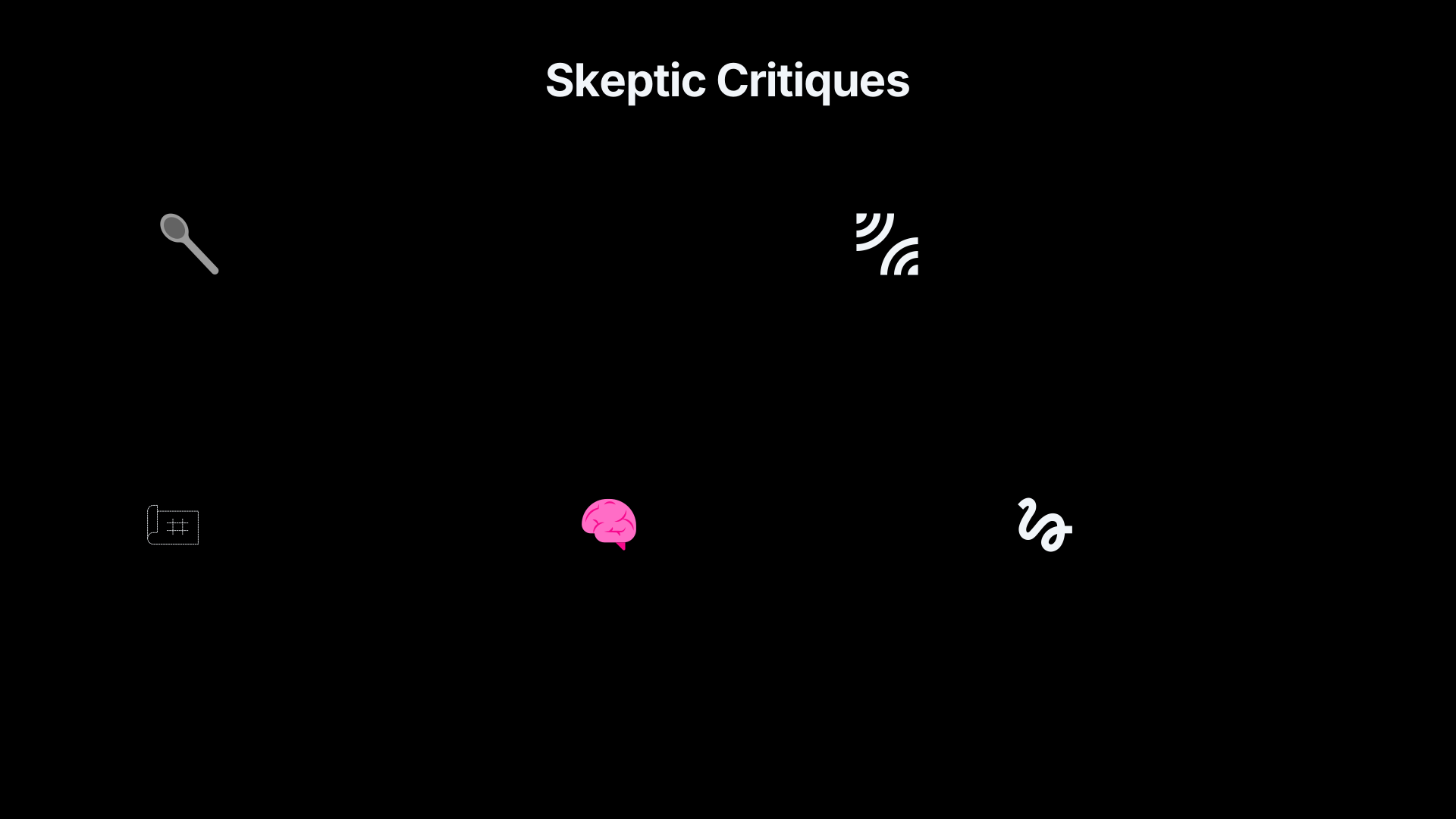
Professional magicians and sceptical investigators repeatedly argued that Geller’s public demonstrations could be reproduced through sleight of hand, misdirection and information leakage. James Randi became the most famous critic, publishing detailed explanations of how many of Geller’s effects could be duplicated without paranormal abilities.[Wikipedia]WikipediaUri GellerUri Geller
More damaging for Puthoff’s reputation were later methodological critiques. Psychologists David Marks and Richard Kammann argued that information could have reached Geller through ordinary means during some experiments. They pointed to possible sensory cues, weaknesses in laboratory setup and opportunities for target information to become accessible. Their analysis became one of the best-known scientific critiques of the SRI work.[Wikipedia]WikipediaParapsychology research at SRIParapsychology research at SRIEven Edgar Mitchell, who was present for the experiments and was a supporter of Geller, noted that Putho…
Ray Hyman, a psychologist who investigated paranormal claims and observed aspects of the Geller research, also criticised the protocols. His concern was not simply that Geller might be fraudulent, but that the experimental design did not adequately exclude normal explanations. Over time, Hyman became one of the most influential sceptical voices arguing that the reported effects had not been demonstrated under sufficiently rigorous conditions.[CIA]cia.gov12 March 1974First, we conducted experiments with Mr. Uri Geller in which we examined his ability, while located in an electrically sh…[Time]time.comscience the magician and the think tankScience: The Magician And the Think TankMar 11, 1973 — After spending a day with Geller and Physicists Targ and Puthoff, Hyman was, in fa…
A recurring sceptical argument can be summarised in three points:
- Extraordinary subjects require extraordinary controls. If a participant may use deception, standard laboratory precautions may not be enough.
- Belief can influence methodology. Critics argued that researchers who already suspected psychic phenomena were real might unintentionally overlook vulnerabilities.
- Publication is not validation. Appearing in Nature showed the work was considered noteworthy, but not that the claims were accepted as established fact.[Nature]nature.comWide sweepby AJ Thomson · 1986 — Well-controlled experiments never find the RV effect, while poorly controlled experiments nearly always…
For many sceptics, the real lesson of the Geller episode is that Puthoff appeared convinced before the fraud question had been conclusively settled. That perception still shapes how they view his later claims about remote viewing, anomalous materials and UAP reports.
The deeper credibility question: judgement rather than evidence
The Geller controversy affects Puthoff’s reputation differently from a simple factual error.
Critics do not merely argue that the SRI experiments produced a wrong conclusion. They argue that the episode revealed a pattern of judgement. In this interpretation, Puthoff repeatedly gravitates towards claims that sit on the edge of established science and tends to interpret ambiguous evidence in ways that favour extraordinary possibilities. The Geller case becomes the earliest and most famous example of that tendency.[Chris Carosa]chriscarosa.comthe stargate folly its never about the science its always about the fundingChris CarosaThe Stargate Folly – It's Never About The Science…26 Apr 2022 — The flaw in the SRI experiments (and the successor project…
This matters because modern UAP debates often involve similar evidential problems. Witness testimony, restricted data, classified sources and incomplete public records leave room for interpretation. Sceptics therefore ask whether the same mindset that accepted Geller’s alleged psychic abilities could also lead to overconfidence in extraordinary UAP hypotheses.
That does not prove that later UAP claims are wrong. It does explain why many critics see the Geller episode as relevant to assessing Puthoff’s reliability as an evaluator of unusual evidence.
How supporters separate old parapsychology from UAP work
Supporters of Puthoff usually respond in several ways.
First, they argue that investigating controversial claims is not itself evidence of poor judgement. Scientists are often criticised for ignoring anomalies, and supporters contend that Puthoff was willing to examine claims that others dismissed without testing. In this reading, being wrong about some phenomena would not automatically invalidate later work in other fields.[Nature]nature.comRUSSELL TARG &; HAROLD PUTHOFF. Nature volume 251, pages 602–607 (…Read more…
Second, supporters note that government agencies genuinely funded and reviewed aspects of psychic research during the Cold War. The SRI programme was not a personal hobby conducted in isolation. Intelligence and defence organisations spent years evaluating whether anomalous perception claims had operational value. The fact that those programmes existed does not prove the claims were real, but supporters argue it demonstrates that serious institutions considered the question worth exploring.[CIA]cia.govURI GELLER AND SCIENCE, A NEW SCIENTIST…Ray Hyman, a psychology professor at the University of Oregon, was called in to see Geller…
Third, defenders argue that the Geller controversy is often used too broadly. They point out that many of Puthoff’s modern UAP-related claims concern radar incidents, military witness reports, sensor data, aerospace programmes and government investigations rather than spoon bending or psychic demonstrations. From this perspective, critics sometimes treat a disputed 1970s paranormal case as if it automatically discredits every later statement he makes.
The strongest supporter position is therefore not that the Geller experiments conclusively proved psychic powers. It is that a controversial research programme from fifty years ago should not be treated as a universal verdict on Puthoff’s competence or honesty.
Did Uri Geller damage Puthoff’s credibility?
In practical terms, yes. The Geller episode remains the single most common example cited by critics who question Puthoff’s judgement.
The damage comes less from the original experiments than from what followed. Geller became one of the most publicly disputed paranormal figures of the twentieth century. Subsequent critiques persuaded many scientists that the SRI protocols had not adequately excluded normal explanations. As a result, Puthoff’s willingness to defend aspects of the research became a lasting reputational burden.[Wikipedia]WikipediaHarold E. PuthoffHarold E. PuthoffIn the 1970s and 1980s, Puthoff directed a program at the Stanford Research Institute (SRI) to investigate paranormal…[Time]time.comscience new flap over uriScience: New Flap Over Uri3 Nov 1974 —… Targ and Hal Puthoff are no match for Uri Geller.” Furthermore, he says, the SRI paper publish…
At the same time, the episode does not settle every question about his later UAP-related work. A person can be overly trusting in one domain yet still possess genuine institutional access, technical expertise or useful information in another. The strongest sceptical reading is that the Geller case warns readers to apply heightened scrutiny to Puthoff’s conclusions. The strongest supportive reading is that it shows a researcher willing to explore unpopular subjects, sometimes at significant reputational cost.
The credibility split around Hal Puthoff is therefore visible in miniature through the Uri Geller story. To supporters, it is evidence of intellectual curiosity in a controversial field. To sceptics, it is evidence that extraordinary claims were accepted before ordinary explanations had been fully eliminated. That disagreement has never really disappeared, and it continues to shape how his role in modern UAP debates is judged today.
Amazon book picks
Further Reading
Books and field guides related to Did Uri Geller damage Puthoff's credibility?. Use these as the next step if you want deeper reading beyond the article.
The Truth about Uri Geller
Directly addresses the controversy that affects assessments of Puthoff.
The Men Who Stare At Goats
Rating: 3.5/5 from 11 Google Books ratings
Explores the culture that allowed paranormal research programs to flourish.
eBay marketplace picks
Marketplace Samples
Example marketplace items related to this page. Use the search link to explore similar finds on eBay.


Endnotes
1.
Source: cia.gov
Link:https://www.cia.gov/readingroom/docs/CIA-RDP96-00787R000200010009-2.pdf
Source snippet
EXPERIMENTS Uri Geller at SRI, August 4-11, 1973To start the experiment, Puthoff, who was with Geller, called Targ, who was with the d...
2.
Source: cia.gov
Link:https://www.cia.gov/readingroom/docs/CIA-RDP96-00787R000100010001-1.pdf
Source snippet
12 March 1974First, we conducted experiments with Mr. Uri Geller in which we examined his ability, while located in an electrically sh...
3.
Source: nature.com
Link:https://www.nature.com/articles/251602a0
Source snippet
RUSSELL TARG &; HAROLD PUTHOFF. Nature volume 251, pages 602–607 (...Read more...
4.
Source: nature.com
Link:https://www.nature.com/articles/251559a0.pdf
Source snippet
nature18 Oct 1974 — one of the subjects, Mr Uri Geller, have been hailed pub- licly as indicating total acceptance by the SRI of al...
5.
Source: Wikipedia
Title: Uri Geller
Link:https://en.wikipedia.org/wiki/Uri_Geller
6.
Source: cia.gov
Link:https://www.cia.gov/readingroom/docs/CIA-RDP96-00787R000700110020-3.pdf
Source snippet
URI GELLER AND SCIENCE, A NEW SCIENTIST...Ray Hyman, a psychology professor at the University of Oregon, was called in to see Geller...
7.
Source: time.com
Title: science the magician and the think tank
Link:https://time.com/archive/6877742/science-the-magician-and-the-think-tank/
Source snippet
Science: The Magician And the Think TankMar 11, 1973 — After spending a day with Geller and Physicists Targ and Puthoff, Hyman was, in fa...
8.
Source: cia.gov
Link:https://www.cia.gov/readingroom/docs/CIA-RDP96-00787R000200080037-4.pdf
Source snippet
ng evidence for "remote viewing." Here, Ray Hyman disputes this...Read more...
9.
Source: time.com
Title: science new flap over uri
Link:https://time.com/archive/6878192/science-new-flap-over-uri/
Source snippet
Science: New Flap Over Uri3 Nov 1974 —... Targ and Hal Puthoff are no match for Uri Geller.” Furthermore, he says, the SRI paper publish...
10.
Source: nature.com
Link:https://www.nature.com/articles/322506a0.pdf
Source snippet
Wide sweepby AJ Thomson · 1986 — Well-controlled experiments never find the RV effect, while poorly controlled experiments nearly always...
11.
Source: Wikipedia
Title: Parapsychology research at SRI
Link:https://en.wikipedia.org/wiki/Parapsychology_research_at_SRI
Source snippet
Parapsychology research at SRIEven Edgar Mitchell, who was present for the experiments and was a supporter of Geller, noted that Putho...
12.
Source: Wikipedia
Title: Harold E. Puthoff
Link:https://en.wikipedia.org/wiki/Harold_E._Puthoff
Source snippet
Harold E. PuthoffIn the 1970s and 1980s, Puthoff directed a program at the Stanford Research Institute (SRI) to investigate paranormal...
13.
Source: time.com
Title: boom times on the psychic frontier
Link:https://time.com/archive/6877897/boom-times-on-the-psychic-frontier/
Source snippet
3 Mar 1974 — Harold Puthoff, one of the two S.R.I, investigators of Uri Geller, is singled out in The Secret Life of Plants as a reputabl...
14.
Source: content.time.com
Title: 0,33009,945074 2,00
Link:https://content.time.com/time/subscriber/article/0%2C33009%2C945074-2%2C00.html
Source snippet
time.comScience: New Flap Over Uri - TIME4 Nov 1974 — He also criticized the controls that Targ and Puthoff used in their experiments...
15.
Source: pubmed.ncbi.nlm.nih.gov
Link:https://pubmed.ncbi.nlm.nih.gov/4423858/
Source snippet
Nature. 1974 Oct 18;251(5476):602-7. doi: 10.1038/251602a0. Authors. R Targ, H Puthoff. PMID...Read more...
16.
Source: chriscarosa.com
Title: the stargate folly its never about the science its always about the funding
Link:https://chriscarosa.com/2022/04/the-stargate-folly-its-never-about-the-science-its-always-about-the-funding/
Source snippet
Chris CarosaThe Stargate Folly – It's Never About The Science...26 Apr 2022 — The flaw in the SRI experiments (and the successor project...
17.
Source: pubmed.ncbi.nlm.nih.gov
Link:https://pubmed.ncbi.nlm.nih.gov/7254336/
Source snippet
Nature. 1981 Jul 23;292(5821):388. doi: 10.1038/292388a0. Authors. H Puthoff, R Targ.Read more...
18.
Source: wearenotsaved.com
Link:https://www.wearenotsaved.com/p/phenomena-why-must-it-always-be-a
Source snippet
Phenomena - Why Must It Always Be a Spoon?Mar 31, 2026 — Between December 1, 1972, and January 15, 1973, Puthoff and Targ completed nine...
Published: December 1, 1972
19.
Source: irenaroglic.si
Link:https://irenaroglic.si/wp-content/uploads/slo/znanclanki/nature1974.doc
Source snippet
Targ and H. E. Puthoff, "Information Transfer under Conditions of Sensory Shielding," Nature 252, 602 (1974).Read more...
Additional References
20.
Source: scribd.com
Link:https://www.scribd.com/document/49221738/A-Meeting-With-Uri-Geller
Source snippet
A Meeting With Uri Geller | PDF | ParapsychologyNature sent the Targ-Puthoff paper for peer review to three referees with the aim of esta...
21.
Source: scribd.com
Link:https://www.scribd.com/document/129548201/James-Randi-The-Truth-About-Uri-Geller-epub
Source snippet
Exposing the Geller Myth | PDF | ParapsychologyRandi details his attempts to offer Geller a way to publicly admit his abilities were tric...
22.
Source: reddit.com
Link:https://www.reddit.com/r/UFOs/comments/1cq55cp/hal_puthoff/
23.
Source: jasonbrownlee.me
Title: Jason Brownlee Mind-Reach and PSI Debunking
Link:https://jasonbrownlee.me/blog/posts/mind-reach/
Source snippet
Mind-Reach and PSI Debunking - Jason Brownlee20 Jan 2025 — The main criticisms of Targ and Puthoff's remote viewing experiments were: Fla...
24.
Source: machronicle.com
Title: The CIA Tested Psychic Spies for 22 Years
Link:https://machronicle.com/the-cia-tested-psychic-spies-for-22-years-they-worked-down-the-street/
Source snippet
They Worked...5 hours ago — In 1974, the results of the experiment were published in Nature, one of the most prestigious scientific jour...
25.
Source: x.com
Title: You make some fair points about Puthoff
Link:https://x.com/StarringShane/status/2051366298563854530
Source snippet
I'm not defending...Ray Hyman, the skeptic on the same panel, agreed that the effect existed. He only really disputed the cause. Both he...
26.
Source: davidfmarks.net
Title: Uri Geller: Self-Proclaimed ‘Psychic’
Link:https://davidfmarks.net/uri-geller-self-proclaimed-psychic/
Source snippet
Curious About Behaviour6 Mar 2020 — A scientific report published in Nature verifying Geller's psychic abilities under supposedly cheat-p...
27.
Source: skepticalaboutskeptics.org
Title: Randi’s take on this series of experiments is withering.Read more
Link:https://skepticalaboutskeptics.org/investigating-skeptics/whos-who-of-media-skeptics/james-randi/james-randi-a-skeptical-look/
Source snippet
James Randi, A Skeptical LookThe article details experiments involving, among other participants, the professed psychic Uri Geller...
28.
Source: youtube.com
Title: Remote viewing, CIA psychic spies, and Project Stargate
Link:https://www.youtube.com/watch?v=dzsm8hMoIUg
Source snippet
The UFO Lie: Shocking truth of Pentagon AAWSAP program | The Basement Office...
29.
Source: stanforddaily.com
Link:https://stanforddaily.com/2023/05/28/letter-from-the-editor-illusions/
Source snippet
Letter from the editor: Illusions28 May 2023 — Originally from Israel, Geller had Targ, Puthoff and the CIA convinced that he had special...
Published: May 2023
Topic Tree